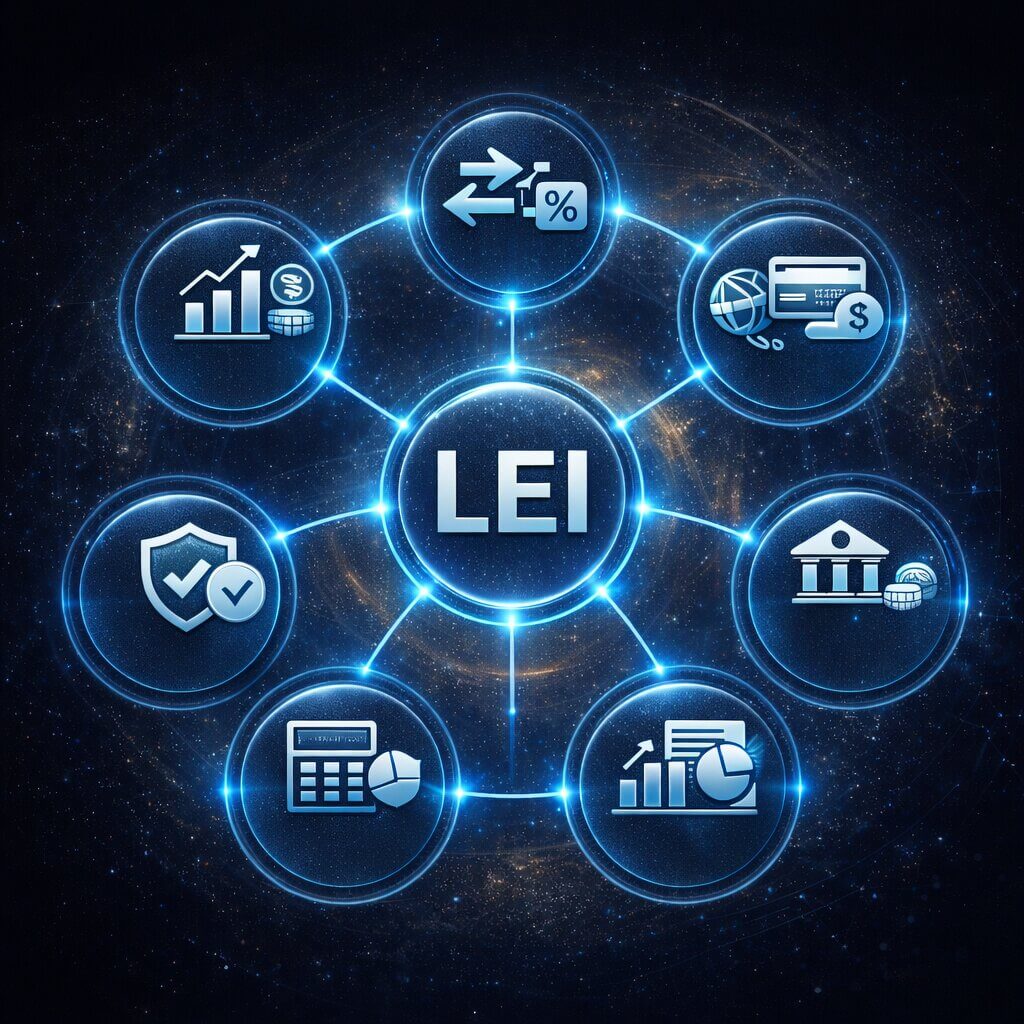

How the LEI code connects companies to EMIR derivatives reporting requirements in the EU

LEI code and EMIR

The derivatives market in Europe is heavily regulated. Since 2012, the European Market Infrastructure Regulation (EMIR) has required all parties to derivative transactions to report their trades. One of the foundational requirements of that system is a valid LEI code. If your company enters into derivative contracts, whether currency swaps, interest rate swaps, futures, or similar instruments, EMIR applies to you regardless of whether you are a financial institution or an ordinary business. The regulation is broad by design. After the 2008 financial crisis, regulators across the G20 agreed that derivatives markets needed far greater transparency. EMIR was the EU’s answer to that commitment. What Is EMIR and What Does It Require The EU adopted EMIR in 2012 to increase transparency in the European derivatives market and reduce systemic risk. The 2008 financial crisis exposed serious weaknesses in derivatives markets.


Read More »
LEI System is a RapidLEI Preferred Partner

LEI System Becomes a RapidLEI Preferred Partner

What is RapidLEI? RapidLEI is the world’s largest GLEIF-accredited LEI Issuer, founded by Ubisecure in 2018. With accreditation in more than 150 jurisdictions worldwide, RapidLEI serves banks, KYB solutions, trust service providers and fintech platforms globally. In total, over 450,000 clients, including BNP Paribas, Tesla and FedEx, manage their LEI codes through RapidLEI. What is a Preferred Partner? RapidLEI works with dozens of registration agents across the globe. However, only four of them carry Preferred Partner status, and LEI System OÜ joined that group in May 2026. Earning Preferred Partner status means that RapidLEI has evaluated LEI System’s trustworthiness, regulatory compliance and service quality so highly that it has chosen to recognise us separately. As a result, LEI System gains greater visibility in the RapidLEI partner directory and closer collaboration and support. In short, it is a distinction awarded by

Read More »
LEI code ensures precise entity identification in ISO 20022 cross-border payment messages

LEI Code and ISO 20022

Cross-border payments have relied on data formats created decades ago. Digital finance has since become the backbone of global trade, but the messaging standards struggled to keep up. That changed in November 2025, when the SWIFT coexistence period ended and ISO 20022 became the sole standard for cross-border payment messages. This shift is bigger than a technical upgrade. The new format brings a growing demand for structured, machine-readable entity identity data, and the LEI code has a clear role in that picture. What Is ISO 20022? ISO 20022 is an international financial messaging standard. It replaces older formats such as the SWIFT MT messages that banks used for decades. The difference goes beyond the technical. Each payment now carries far more structured data, including precise information about the payer and the payee, reference numbers, and fields that matter for regulatory

Read More »
LEI code as the key to MiCA compliance for crypto-asset service providers in the EU

LEI Code and MiCA: What Crypto Service Providers Need to Know

The EU’s Markets in Crypto-Assets Regulation, known as MiCA (Regulation EU 2023/1114), is the world’s first comprehensive legal framework for crypto-asset markets. It changed the rules for everyone operating in the European crypto space. One of its less-discussed requirements has nothing to do with blockchain technology. It concerns how a company proves who it is. That is where the LEI code comes in. What Is MiCA and Who Does It Cover? MiCA was adopted by the European Parliament in April 2023 and entered into force in June 2023. It rolled out in two phases. The first phase, effective from 30 June 2024, covered asset-referenced tokens (ARTs) and e-money tokens (EMTs). The second phase, effective from 30 December 2024, extended the framework to all crypto-asset service providers, referred to as CASPs. A CASP (Crypto-Asset Service Provider) is any legal entity that

Read More »
Global network of verified and unverified legal entities illustrating the KYB process using LEI codes

LEI Code and KYB: How to Identify Business Partners Reliably

What is KYB? KYB, or Know Your Business, is the process of verifying the identity, ownership structure, and legal status of business partners, suppliers, and clients — both before and during a business relationship. KYB developed as part of the broader KYC (Know Your Customer) framework. KYC covers customer due diligence in general, applying to both individuals and legal entities. KYB is more specific: it focuses on legal entities in particular. The core question is not only who the individual is, but what the company actually is, who owns it, and who acts on its behalf. KYB emerged in response to a clear regulatory gap. For decades, individual identities faced strict scrutiny, while companies operated under much weaker requirements. As a result, legal entities became a vehicle for concealing money laundering, terrorist financing, and other financial crime. In Europe, regulators

Read More »
LEI code as digital business identity — fingerprint transforming into data network

Why Artificial Intelligence Needs Reliable Business Identity

Why business identity matters for AI Artificial intelligence is transforming how companies process data, assess risk, and make decisions. Financial institutions use AI to detect fraud, assess credit risk, and verify counterparty identity. Across industries, automated systems increasingly rely on AI to screen suppliers, partners, and clients before entering into contracts or transactions. In all these cases, one shared requirement exists: the AI system needs accurate, verified information about who it is dealing with. This is exactly where the LEI code becomes essential. What does AI actually need from business data? AI is only as good as the data it relies on. This principle is especially true for business identity data. Consider a simple example: “Volkswagen AG”, “Volkswagen Aktiengesellschaft”, and “VW Group” all refer to the same company. However, to a machine, these look like three completely separate entities. Furthermore,

Read More »
Digital operational resilience under DORA — how financial entities identify ICT providers using a valid LEI code

LEI Code and DORA: What ICT Providers Need to Know

What Is DORA? The Digital Operational Resilience Act — known as DORA — is Regulation (EU) 2022/2554, adopted by the European Parliament and the Council on 14 December 2022. The EU published it in the Official Journal on 27 December 2022. It entered into force on 16 January 2023 and became fully applicable on 17 January 2025. DORA addresses a specific gap in EU financial regulation. Before DORA, financial institutions managed operational risk primarily by setting aside capital. However, that approach did not adequately cover ICT-related disruptions, which can affect many institutions at the same time when a shared technology provider fails. Therefore, DORA introduces a uniform framework across the EU for ICT risk management, incident reporting, operational resilience testing, and oversight of third-party technology providers. Who Must Comply with DORA? DORA applies to two main groups of organisations involved

Read More »
Global LEI code use cases in financial markets, payments, reporting, and international business operations

Do Companies Need an LEI Code in 2026?

LEI is no longer limited to financial institutions Most companies initially assume that the LEI code only applies to banks or large financial institutions. However, this perception is outdated. Over the past decade, the role of LEI has expanded significantly across multiple sectors and jurisdictions. Today, companies encounter LEI requirements when they move into more advanced financial activities. For example, this includes investing in markets, applying for financing, making cross-border payments, participating in regulated environments, or interacting with financial institutions. By 2026, LEI clearly forms part of global financial infrastructure. In some countries, it is already deeply embedded into regulatory frameworks. In others, its adoption is accelerating as part of broader digitalization and transparency initiatives. As a result, the need for an LEI depends primarily on business activity rather than company size or industry alone. What is an LEI code?

Read More »
FATF Travel Rule global financial transactions and structured entity identity data using LEI

FATF Travel Rule Explained

The FATF Travel Rule (Recommendation 16) requires financial institutions to include information about the sender and the recipient in certain transactions. This article explains what the rule means in practice, why FATF Travel Rule compliance can be difficult, and how structured identifiers like LEI help solve this challenge. What is the FATF Travel Rule? The FATF Travel Rule is a global standard (Recommendation 16) that requires financial institutions to include verified information about the originator and beneficiary in certain financial transactions, especially cross-border payments. The purpose is to make transactions traceable and reduce the risk of money laundering and terrorist financing. What is FATF and where does the Travel Rule come from? The Financial Action Task Force (FATF) is an international body established in 1989 by the G7. Its role is to develop global standards to combat money laundering and

Read More »